On this page
A cat food puzzle exchanges some easy access to food for a small foraging task. It can give an indoor cat an activity, but its value depends on whether the cat engages with it and can obtain the food. Buying a complicated puzzle is not evidence that it will be used or that it will improve a medical condition.
There are inexpensive manufacturer examples with published prices and detailed use limits. This comparison checks those figures in October 2026 and keeps sale prices separate from regular MSRPs. It also distinguishes a supervised puzzle from a timed feeder and from other cat toys that do not dispense food.
Key figures
- $10.00 Outward Hound Melon Madness sale price
- $12.50 Outward Hound Rainy Day sale price
- $19.99 Melon Madness regular suggested retail price
Published puzzle prices are $10 to $12.50 in this sale
| Outward Hound cat game | Displayed sale price | Displayed regular MSRP |
|---|---|---|
| Melon Madness Puzzle & Play | $10.00 | $19.99 |
| Rainy Day Puzzle & Play | $12.50 | $24.99 |
| Buggin’ Out Puzzle & Play | $10.00 | $19.99 |
Source note: Outward Hound’s cat-game collection and Buggin’ Out product page, checked October 2026. Prices are the manufacturer’s current listings, not a permanent price promise or whole-market range. Buggin’ Out is marked out of stock on the collection page, although its product page retains the price.
- Melon Madness Puzzle & Play$10.00
- Rainy Day Puzzle & Play$12.50
- Buggin' Out Puzzle & Play$10.00
Source note: Outward Hound's cat-game collection and Buggin' Out product page, checked October 2026. Prices are the manufacturer's current listings, not a permanent price promise or whole-market range. Buggin' Out is marked out of stock on the collection page, although its product page retains the price.
The sale difference between Melon Madness and Rainy Day is $2.50. Buy based on a task the cat can learn and the household can supervise, rather than automatically choosing the larger MSRP discount. Shipping or a minimum-order requirement can exceed the difference between the products.
Do not turn the manufacturer’s regular price into the price “usually paid” by all owners. An MSRP is a reference price, while the sale is the current listed offer. If the price or stock changes at checkout, update the comparison instead of relying on the earlier displayed saving.
The adult cat budget treats this as optional equipment. One puzzle that gets repeated use is a better cost basis than several designs purchased at once before the cat has learned the first.
Capacity describes the toy rather than the cat’s portion
The current Buggin’ Out manufacturer page specifies 16 hidden treat compartments and capacity up to 1/4 cup. The cat moves pegs and swivels leaves to uncover the food. The page says difficulty can be adjusted, so the same product can present an easier introduction and a later challenge.
These capacities do not determine how much the cat should eat. A quarter cup of one dry food can supply different energy from a quarter cup of another. Follow the feeding plan and count food placed in the puzzle within that plan rather than adding a full puzzle on top of meals.
As arithmetic only, if an agreed dry-food portion were 1/2 cup, a toy with a 1/4-cup capacity could not hold all of it in one filling. That does not mean the entire portion should be puzzle-fed, nor that the toy needs to be filled to its limit. Capacity and the amount offered are separate decisions.
AAFP’s feeding brochure discusses using food puzzles and foraging opportunities alongside attention to calorie intake. The task is to make access interesting while retaining intake the cat can manage, not to make every meal an obstacle.
An easier starting task prevents wasted purchases
A puzzle should be introduced at a level where the cat can find food without prolonged frustration. Start with an easy configuration under observation and watch how the animal approaches it. If the cat walks away repeatedly or cannot retrieve the food, increase accessibility rather than withholding the usual meal to force success.
The indoor cat enrichment guide puts feeding activities alongside play, resting places and other environmental resources. A food puzzle is one option, not the single purchase that makes every indoor environment adequate.
Consider movement and access before choosing a design. A flat tray, a movable dispenser and a puzzle requiring a paw to reach into compartments present different tasks. A cat with new difficulty moving, eating or using its mouth needs assessment; a more expensive puzzle does not resolve the underlying reason.
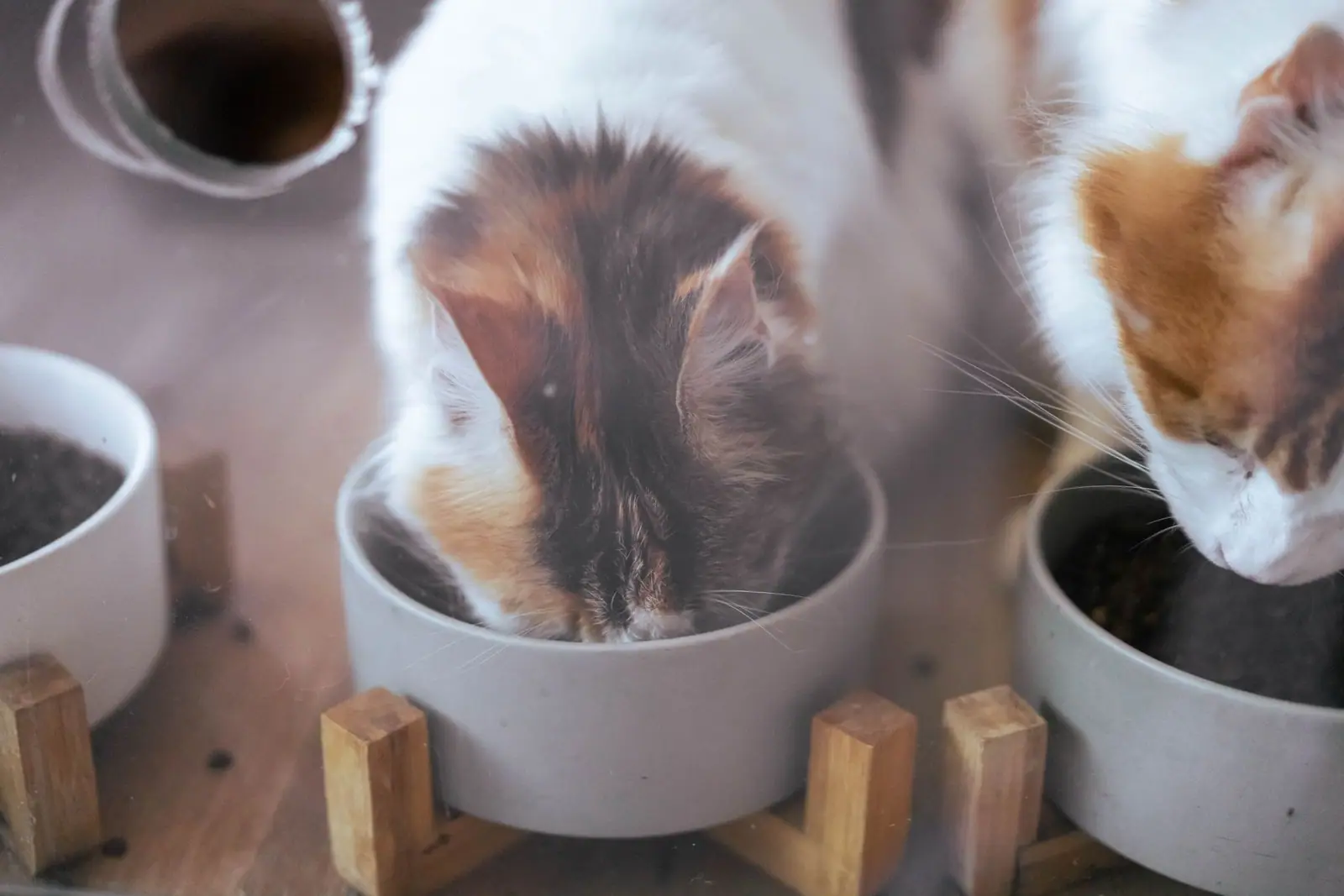
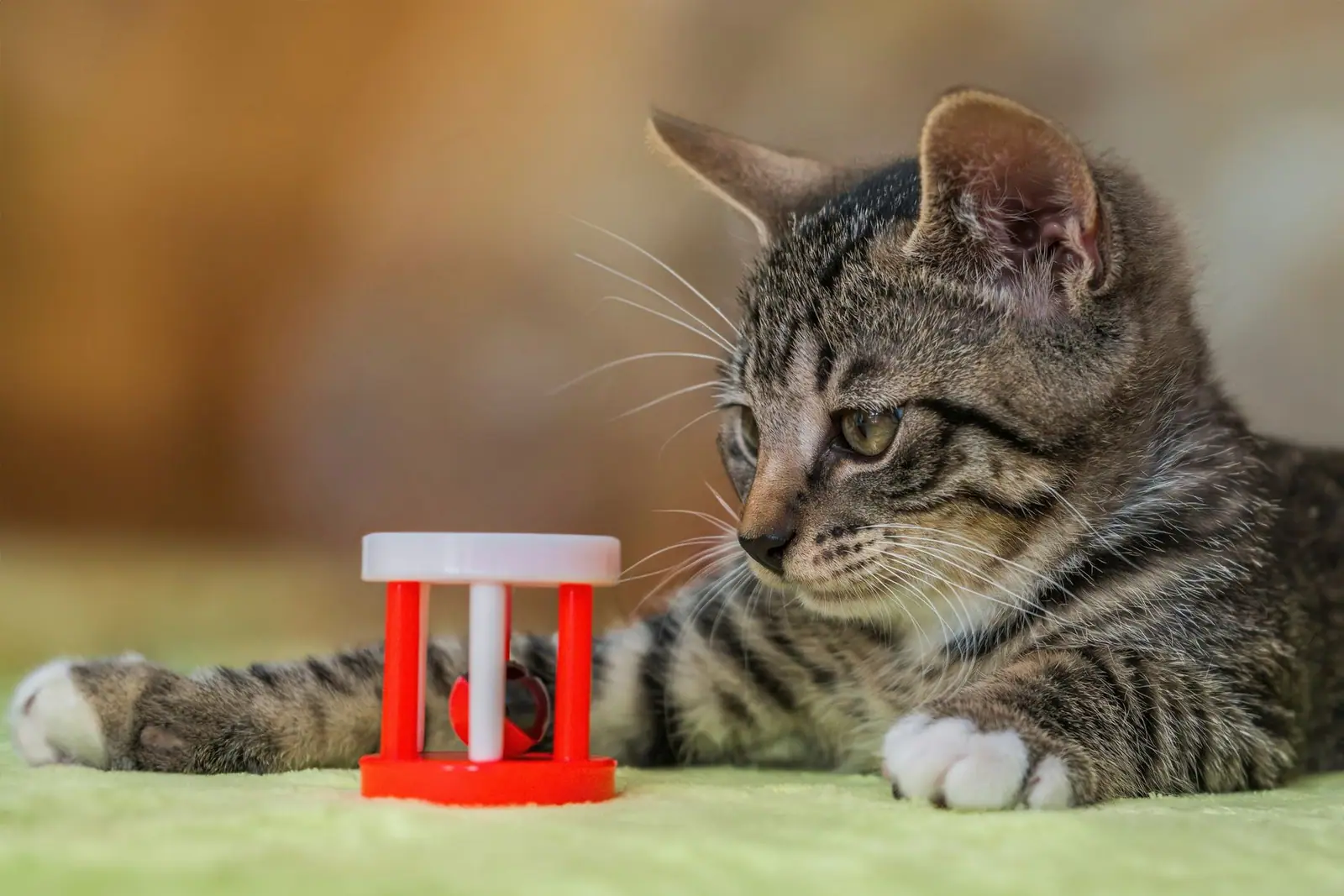
The red-and-white toy shown on the article’s cover illustrates cat play; it is not identified as one of the priced food-puzzle models. Product prices come from the manufacturer’s pages, not from a stock photograph or an implied household test.
Supervision distinguishes this puzzle from an automatic feeder
Outward Hound’s Buggin’ Out instructions explicitly require close supervision, say not to leave the cat alone with it, and require removing a damaged puzzle. The company also instructs owners to store it after supervised use. That is a narrower use case than placing a full toy on the floor for an unattended weekend.
The automatic cat feeder comparison covers timed delivery, another task entirely. A timer can release food on a schedule; a puzzle makes food accessible through an activity. Neither proves which cat ate the portion or whether that cat is well.
Inspect the toy, follow its cleaning instructions and discard it if damage makes continued use unsafe. “No removable parts” in the manufacturer’s description does not mean a damaged component can be ignored or that all chewing is harmless.
Ask the veterinarian about a new loss of appetite, trouble eating or weight change. Do not interpret a cat’s refusal to engage with a puzzle as proof that it needs a harder challenge, and do not use food deprivation to justify the purchase.
Repeated use is a clearer value measure than promised savings
A puzzle generally does not save food spending when it uses the same measured ration. Its value is the activity it adds. A cheaper model that the cat uses repeatedly can therefore be better value than an unused premium toy, even when both have the same food capacity.
For an illustrative equipment calculation, a $10 puzzle used twice weekly for 26 weeks has 52 sessions, or about 19 cents per session before cleaning and wear. A $12.50 puzzle at the same frequency is about 24 cents. The frequency is an example, not an instruction for how often a cat must use a puzzle.
Do not assign a veterinary-bill saving or a guaranteed amount of weight loss to those sessions. Enrichment guidance supports offering feeding activity, but does not turn a particular retail product into a treatment guarantee.
Start with one manageable task, confirm the cat can access its food, and assess whether the household will continue supervising and cleaning it. The price comparison then has a practical endpoint: a product that adds an activity the cat uses without creating avoidable extra food intake or replacing necessary care.
Questions people ask
How much does a cat food puzzle cost?
Current Outward Hound sale examples are $10 for Melon Madness and Buggin' Out, and $12.50 for Rainy Day. Regular MSRPs are $19.99 or $24.99. Availability and checkout charges can change the total.
How much food fits in Buggin' Out?
The current manufacturer page specifies up to 1/4 cup and 16 hidden compartments. Capacity is a product limit, not a feeding recommendation for a cat.
Can I leave a food puzzle out while away?
Follow its instructions. Outward Hound's Buggin' Out requires supervision and says not to leave a cat alone with it. It is not an unattended timed feeder.
Should puzzle food be extra treats?
Count the food within the cat's feeding allowance. A puzzle changes access to food; it does not remove its calories or replace assessment of a new feeding problem.
Where these figures come from
- Cat Games: Current Prices and Availability Outward Hound · outwardhound.com
- Buggin' Out: Capacity, Compartments and Safety Instructions Outward Hound · outwardhound.com
- How to Feed a Cat: Food Puzzles and Feeding Resources American Association of Feline Practitioners · catfriendly.com
Figures last checked October 2026.