On this page
A kitten’s litter setup can begin with inexpensive equipment. The hard part is choosing a tray the kitten can enter, giving it accessible locations and keeping those locations clean. Buying a costly covered or automatic box does not remove those requirements or guarantee that accidents stop.
The manufacturer prices below were checked in October 2026. They are examples for open trays, not a prescription for one model. Litter, scoops and cleaning products in the worked budget use clearly labeled assumptions so a reader can replace them with the products already used by the kitten’s breeder, shelter or household.
Key figures
- $6.99 Petmate gray small open litter tray
- $10.99 Petmate gray large open litter tray
- $16.99 Petmate gray jumbo open litter tray
Open trays cost $6.99 to $16.99 in this range
Petmate publishes size variants for its Basic Litter Box. The gray versions were available when checked. The jumbo blue version also listed $16.99; the $4.99 blue medium was unavailable, so it should not be used as the cost of an immediately obtainable setup.
| Gray Basic Litter Box | Current price | Manufacturer’s outside dimensions, inches |
|---|---|---|
| Small | $6.99 | 14.05 × 10.50 × 3.50 |
| Medium | $7.99 | 16.05 × 12.05 × 4.00 |
| Large | $10.99 | 18.55 × 15.35 × 5.00 |
| Jumbo | $16.99 | 22.05 × 16.55 × 6.50 |
Source note: Petmate Basic Litter Box product page and public variant catalog, checked October 2026. Dimensions describe the product exterior, not a measured flat interior floor or a lowered entry opening.
- Small$6.99
- Medium$7.99
- Large$10.99
- Jumbo$16.99
Source note: Petmate Basic Litter Box product page and public variant catalog, checked October 2026. Dimensions describe the product exterior, not a measured flat interior floor or a lowered entry opening.
For two trays, the product-only totals are $13.98, $15.98, $21.98 and $33.98. A pair of large trays therefore costs $6 more than a pair of mediums. That modest difference may be worth considering when the larger tray fits the cat and the room, but higher sides can change access for a very small kitten.
The size name is not enough. Confirm the entry height and usable inside length rather than reading outside dimensions as a guarantee of fit. A kitten that can climb over a rim today may grow into a cat that needs a longer tray. Conversely, buying the largest high-sided tray can make the first setup harder to enter.
Box count and location matter more than a decorative cabinet
The AAFP/ISFM house-soiling brochure recommends one box per cat plus one extra, in different locations. That means two for one cat, three for two cats and four for three. It also explains that adjacent trays can function as one location rather than two independent resources.
Two medium trays at $7.99 total $15.98; three total $23.97. Adding a second cat does not necessarily mean doubling every accessory, but it does add a $7.99 tray in this example. Litter consumption and cleaning time should be measured separately instead of assumed identical for all households.
Place trays where the kitten can reach them without a closed door, a difficult staircase or another pet blocking the route. Keep them away from food and water. A quiet accessible location is more valuable than a cabinet that looks tidy but leaves a narrow entry or makes cleaning inconvenient.
The litter box count guide explains the layout in more detail. In a home with several levels, account for access on the levels the kitten uses. Do not buy a second tray and then leave both locked away in the same utility room.
A growing kitten changes the fit calculation
The veterinary guideline uses a tray length of about 1.5 times the cat’s length from nose to the base of the tail. A hypothetical 10-inch measurement produces a 15-inch length; 12 inches produces 18 inches; 14 inches produces 21 inches. The tail itself is not added to that body measurement.
These calculations help explain why a small kitten’s tray may not remain adequate. A medium tray with a 16.05-inch outside length cannot be assumed to provide an 18-inch interior. Even a nominally large tray needs an interior check when the exterior is only slightly longer than the guideline.
Keep enough open space for turning and digging without forcing the kitten through a hood it dislikes. Veterinary guidance notes that many cats dislike strong scents and dusty litter. The cat litter guide covers material choices; maintaining a familiar acceptable litter during a move can be more practical than changing the tray, litter and location at once.
A starter subtotal can stay under $50 in this example
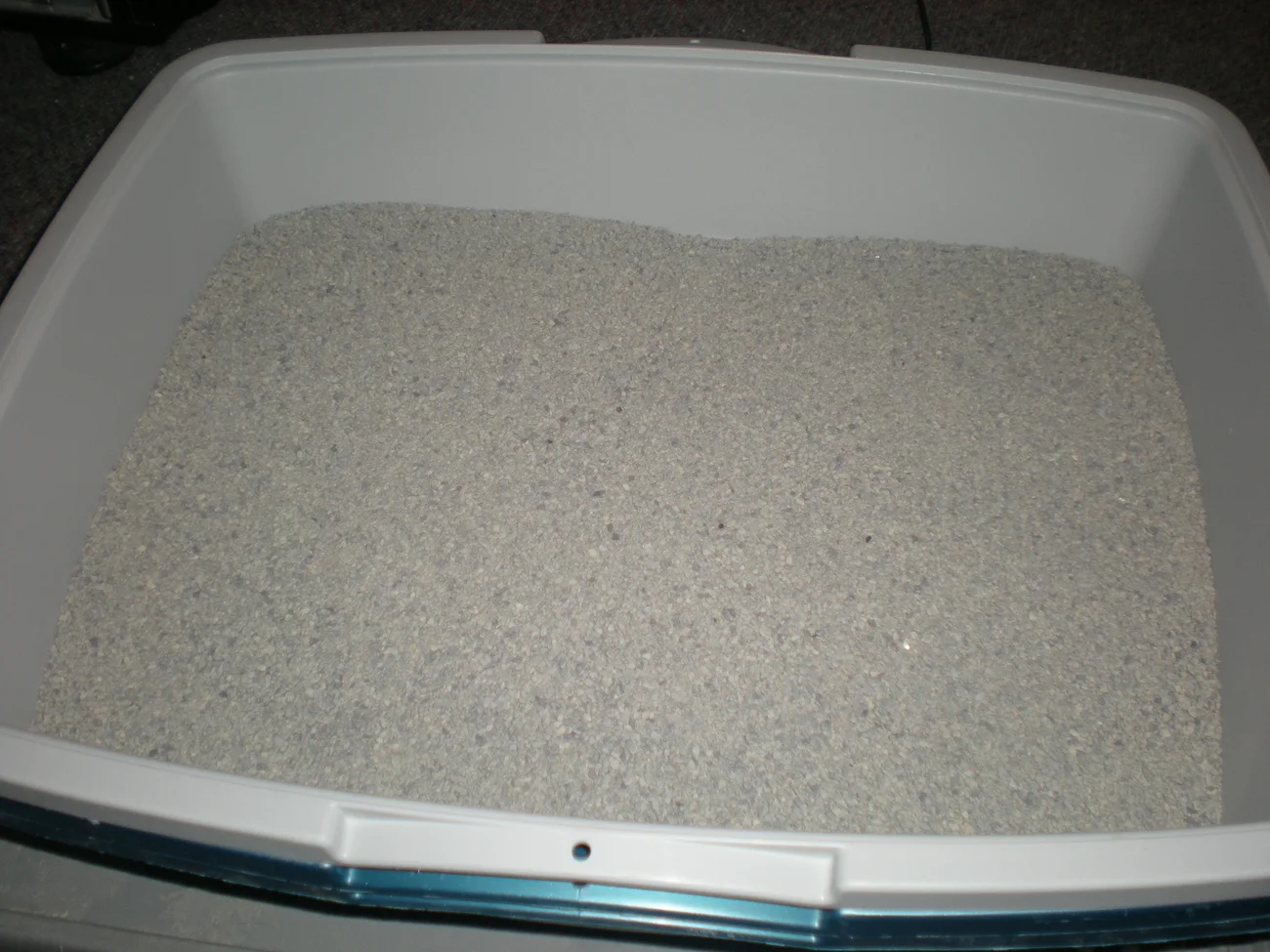
Take two medium trays at the published $7.99 price, then assume $6 for a scoop and waste bags, $15 for an initial litter purchase and $10 for cleaning supplies. The subtotal is $46.98 before shipping and tax. Only the tray price is published here; the other numbers are worksheet allowances, not a researched national range.
Using two large trays instead raises the same subtotal to $52.98. Using two jumbos makes it $64.98. The point is to compare a setup that fits, rather than to make the $50 line a spending limit. Products already owned can reduce checkout spending, while delivery or a larger litter purchase can increase it.
Keep first-fill purchases separate from ongoing litter use. Suppose a hypothetical 20-pound bag costs $15. Its unit cost is $0.75 per pound. At a measured household use of 10 pounds a month, the monthly consumption cost is $7.50 and a year’s consumption is $90. At 15 pounds a month, those figures become $11.25 and $135.
Neither use rate is a kitten care recommendation. Tray dimensions, litter type, scooping and replacements change the amount needed. Record purchases and what remains over a month before attaching an annual figure to the first bag. A bag that supplies two first fills can appear to disappear quickly without establishing the continuing rate.
Cleaning supports training without adding a punishment routine
The house-soiling brochure advises removing waste at least daily and washing trays with soap and hot water every one to four weeks, avoiding strong chemicals and ammonia-based products. Follow the litter and cleaning-product instructions too; mixing cleaners is not part of a training budget.
As a time worksheet, an assumed three minutes of daily scooping equals 90 minutes over a 30-day month. That is unpaid household work unless someone is hired to do it. Buying an automatic box should not be presented as recovering that time in cash, and it still requires inspection and cleaning.
If accidents occur, check access, cleanliness and where they happen. Keep a short record of stools, urination and changes rather than simply buying stronger fragrance. The veterinary brochure distinguishes medical and environmental causes of house-soiling; a kitten cannot be assumed to be misbehaving because an expensive tray is available.
Seek veterinary care promptly for straining, repeated unsuccessful attempts to urinate, blood or a kitten that seems ill. A shopping or training change does not treat a urinary problem, and punishment does not identify its cause.
CDC’s cat guidance recommends washing hands after cleaning litter and keeping litter equipment away from food areas. Household hygiene belongs in the setup from the start, especially where children help with pet care. Store waste and supplies so they can be handled without turning the food-preparation sink into the tray-washing station.
The first-year cat budget puts these starter items alongside food and veterinary costs. Budget additional trays when the household or the cat’s size changes; replacing every accessory on an arbitrary monthly cycle would inflate the bill without improving access.
Questions people ask
How much does a kitten litter setup cost?
Two $7.99 medium trays plus hypothetical $6 scooping supplies, $15 litter and $10 cleaning supplies total $46.98 before added charges. Fit, products already owned and litter choice can change that worksheet.
How many trays should one kitten have?
The veterinary rule of thumb is one per cat plus one extra, giving one kitten two trays in different accessible locations. The home's layout can call for additional access points.
Can a kitten keep its small tray as an adult?
Only if usable size and access still work. The guideline is about 1.5 times nose-to-tail-base length, so growth can make a previously adequate tray too short.
Will a more expensive box stop accidents?
Price alone cannot resolve inaccessible trays, disliked litter or illness. Check the environment and contact a veterinarian for new house-soiling or signs of discomfort.
Where these figures come from
- Basic Litter Box: Prices and Dimensions Petmate · petmate.com
- House-Soiling: Box Count, Fit and Cleaning AAFP and ISFM · catfriendly.com
- Cats: Healthy Pets, Healthy People CDC · cdc.gov
Figures last checked October 2026.