On this page
Housetraining looks like a training problem and is mostly a logistics problem. A young puppy physically cannot hold on for long, and it has no idea yet that the grass is different from the rug. Your job is to make sure it is outside at the moments it is most likely to go, and to reward it heavily when it does.
Get the timing right and the training mostly happens on its own.
Key figures
- between 5 and 30 minutes AKC post-meal window for a toilet trip
- about 3 hours Example: holding limit for a 2-month-old puppy
How long a puppy can actually hold on
The American Kennel Club puts it simply: take the age of your puppy in months and add one, and that is the maximum number of hours the puppy should be expected to hold it comfortably between breaks.
| Age | Realistic maximum |
|---|---|
| 2 months | about 3 hours |
| 3 months | about 4 hours |
| 4 months | about 5 hours |
| 6 months | most puppies are reliable most of the time |
Two things about that table. It is a maximum, not a target: a puppy taken out more often learns faster. And overnight is usually a little longer, because a sleeping puppy produces less urine.
The five trips that matter
Clock-based trips are useful. Event-based trips are what actually prevents accidents. AKC lists the moments:
- Immediately on waking, morning and after every nap.
- After eating. AKC suggests going out between 5 and 30 minutes after a meal.
- After play, and during long play sessions.
- After anything exciting, such as visitors arriving.
- Last thing before bed.
How to do the trip itself
- Same spot every time. The smell does half the work.
- On the lead, even in your own garden, for the first weeks. It keeps the trip about the job rather than about the garden.
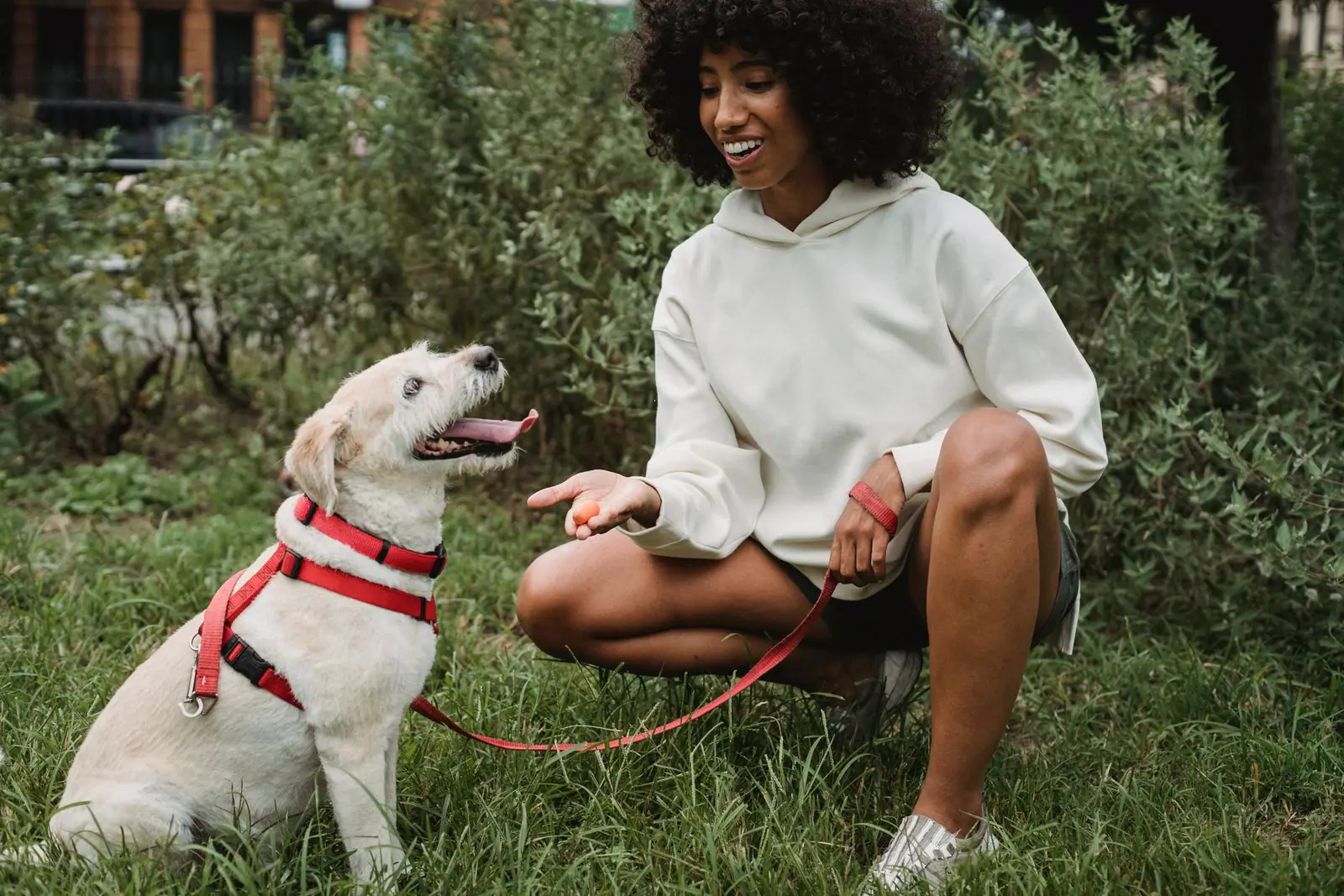
- Reward within three seconds of finishing, outside, with something genuinely good. Not after coming back in, which rewards coming back in.
- Boring until it happens. No play before the job is done, then play as a bonus.
An accident means the schedule was too slow or supervision lapsed. Clean it with an enzymatic cleaner, because ordinary household cleaners leave a scent marker the puppy will return to. Do not punish it: a punished puppy learns to go where you are not, which is behind the sofa.
Confinement, used properly
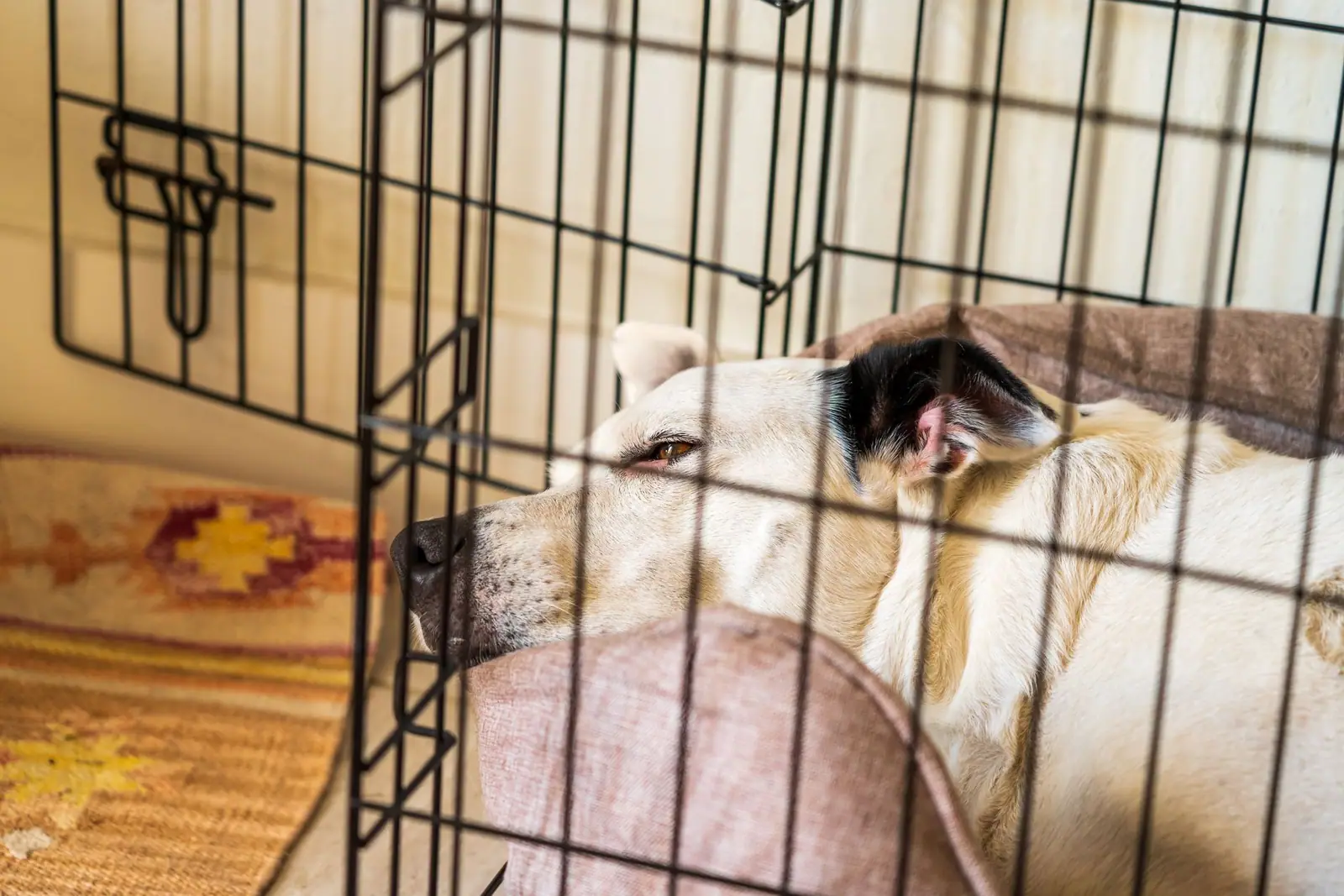
When you cannot watch the puppy, it should be in a space small enough that it would rather not soil it, which is the whole logic of a crate. That only works if the puppy is not left longer than the age-plus-one rule allows, and if the crate is a good place rather than a punishment. A puppy left too long has to soil the crate, and once that habit forms the crate stops helping.
When to ask for help
Frequent small amounts, straining, blood, or a puppy that was reliable and suddenly is not, all deserve a vet visit before more training. Urinary tract infections are common in young dogs and no amount of scheduling fixes one.
The crate-training guide covers one part of the home routine. The dog walker cost guide prices outside help when the household cannot provide a planned outing.
Questions people ask
How long does it take to potty train a puppy?
AKC says a puppy whose training started early is usually dependable most of the time by about six months. Individual puppies and schedules vary widely.
How often should I take my puppy out at night?
Follow the age-plus-one rule, but expect one night trip for a very young puppy. Most puppies can sleep through by around four months.
Should I use puppy pads?
They solve an immediate problem and create a second training step later, because the puppy learns that going indoors is allowed. If you do not need them, skip them.
My puppy pees when greeting people. Is that a training failure?
Usually not. Excitement and submissive urination are different from housetraining problems and are made worse by scolding. Keep greetings calm and low-key, and ask your vet if it persists.
Where these figures come from
- Puppy Potty Training Timeline American Kennel Club · akc.org
- How to Potty Train a Puppy American Kennel Club · akc.org
Figures last checked September 2026.